1
/
of
1
Salifert
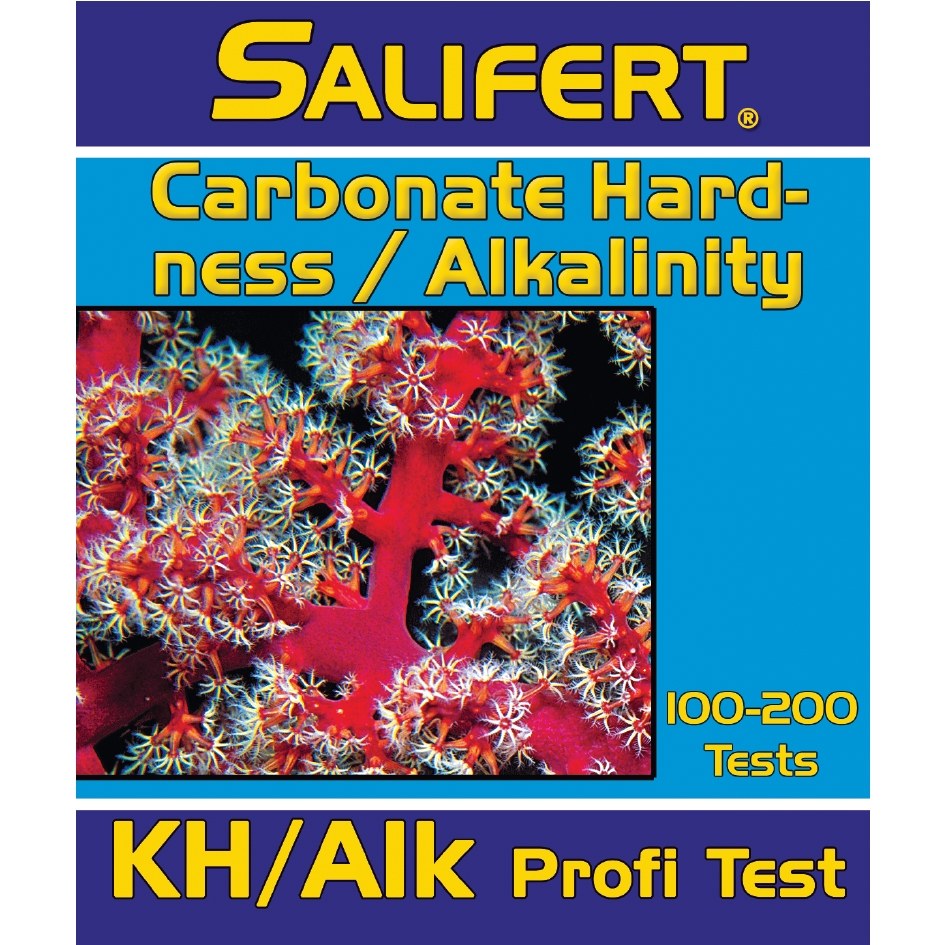
Salifert KH/Alkalinity Aquarium Test Kit
Salifert KH/Alkalinity Aquarium Test Kit
Regular price
$17.02
Regular price
Sale price
$17.02
Shipping calculated at checkout.
Quantity
Couldn't load pickup availability
Alkalinity Test Kit for Reef and Saltwater Aquariums
The Salifert KH/Alkalinity Profi-Test is a titration kit used to measure carbonate hardness and alkalinity in marine aquariums. Alkalinity is a key parameter in reef tanks, along with calcium and magnesium, affecting coral growth, pH stability, and water buffering. Salifert's test kits are popular in the reef hobby because they are accurate and show clear color changes, making it easy to get reliable results.
The kit measures in steps of 0.1 meq/L or 0.3 dKH, which helps detect small, important changes in a stable reef. A change of 0.4 dKH (0.14 meq/L) or more can impact coral health, and less precise kits may miss these small shifts. Each kit allows for about 100 tests, suitable for weekly or twice-weekly checks.
Key Features:
- Titration-based test method produces accurate, repeatable results with a clear color endpoint.
- Measures in 0.1 meq/L / 0.3 dKH increments for the resolution needed to track meaningful alkalinity fluctuations.
- Results reported in both meq/L and dKH to match whichever scale your dosing system or reference uses.
- Approximately 100 tests per kit (up to 200 possible depending on use).
- Trusted by reef hobbyists for consistent performance across saltwater and reef applications.
Ideal For:
- Reef tanks with SPS, LPS, or mixed coral where alkalinity stability is a primary maintenance priority.
- Hobbyists running two-part dosing, calcium reactors, or kalkwasser who need reliable baseline measurements to dial in addition rates.
- Any saltwater tank keeper who tests alkalinity on a weekly or twice-weekly basis and wants a consistent, proven test method.
Why Alkalinity Matters?
- Alkalinity (KH or carbonate hardness) is the measure of carbonate and bicarbonate ions in the water that form the buffering system keeping pH stable and supplying the raw material corals use to build their calcium carbonate skeletons. In a reef tank, alkalinity is consumed continuously by coral growth and by the natural CO2 cycle. Without regular testing and replenishment, it drops silently — often faster than calcium — and unstable alkalinity is one of the most common causes of coral tissue loss and growth stalls in otherwise well-kept systems.
- Salifert recommends maintaining alkalinity between 2.8–3.2 meq/L (7.8–9 dKH) for most reef tanks, and avoiding fluctuations greater than 0.4 dKH between tests.
Pro Tips:
- Test at the same time each day. Alkalinity naturally fluctuates slightly with the light cycle due to photosynthesis and respiration. Testing at a consistent time — typically morning before lights come on — gives you the most comparable baseline across tests.
- Test alkalinity before adjusting your dosing. If you're running two-part or a calcium reactor, always test first and dose to a known target, not to a general schedule. Salifert's 0.1 meq/L resolution makes this practical even for small corrections.
- Keep the kit away from heat and direct sunlight. Salifert reagents are sensitive to temperature and UV exposure. Store the kit in a cabinet or drawer, not on the tank stand or a shelf above the sump. Degraded reagent is the most common cause of inconsistent results with otherwise reliable test kits.
Online exclusive: this item is ordered in for you and is usually ready within a few business days. Choose in-store pickup, local delivery or shipping at checkout.
Share